What is the Best Adrenal Operation for Primary Aldosteronism?
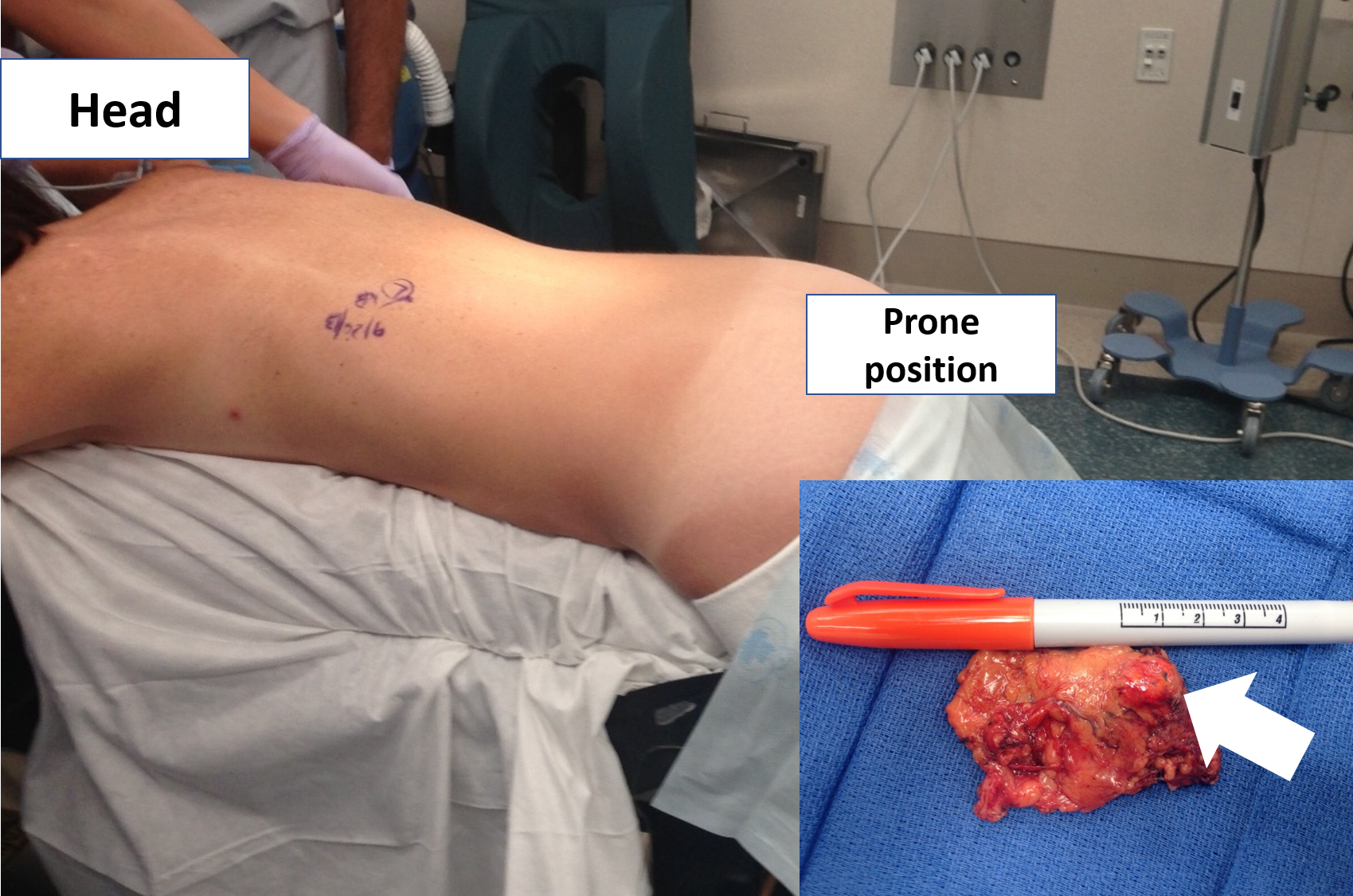 The correct prone position of a patient undergoing a left Mini Back Scope Adrenalectomy (MBSA). This operation was performed by Dr. Carling for a 1.2 cm aldosterone-producing adrenal tumor causing primary aldosteronism (Conn’s syndrome).
In our view, the best operation for removing the adrenal tumor that is causing primary aldosteronism is the Mini Back Scope Adrenalectomy (MBSA). The operation is also called posterior retroperitoneoscopic adrenalectomy, because it is performed with very small scopes that go through the lower, outer back.
The correct prone position of a patient undergoing a left Mini Back Scope Adrenalectomy (MBSA). This operation was performed by Dr. Carling for a 1.2 cm aldosterone-producing adrenal tumor causing primary aldosteronism (Conn’s syndrome).
In our view, the best operation for removing the adrenal tumor that is causing primary aldosteronism is the Mini Back Scope Adrenalectomy (MBSA). The operation is also called posterior retroperitoneoscopic adrenalectomy, because it is performed with very small scopes that go through the lower, outer back.
The Mini Back Scope Adrenalectomy (MBSA) is used for more than 95% of our adrenal operations, and for nearly all of our patients with PA. There are many reasons we prefer this technique over the others. The operation is performed with a scope through three small incisions in the lower back. The cosmetic outcome is excellent, and the approach to the adrenal gland is very direct. The technique was developed in Germany in the 1990s; Dr. Carling has used it for many years and has taught it to other surgeons.
How is a Mini Back Scope Adrenalectomy (MBSA) Performed? The way the operation is done, in experienced hands, leads to minimal blood loss. It is also faster, because less dissection (mobilization of other organs) is needed during the operation. All these factors lead to less pain for the patient, a shorter stay, and a faster recovery and return to normal activities and work. Less mobilization also means less risk of injury to surrounding structures such as the kidney, liver, spleen, pancreas, bowel, or major vessels such as the inferior vena cava (IVC).
Dr. Carling's Experience with Surgery for Primary Aldosteronism. Dr. Carling has performed thousands of adrenal operations over his career, including more than 2,400 since January 2022 alone, and he personally performs every operation. When performed for PA, the operation typically takes about 20 minutes. By going through the back, the surgeon has a very direct approach to the adrenal gland. Note that this is an advanced technique: surgeons who operate on adrenal glands only a few times per year are unlikely to offer you this operation. The typical surgeon who performs adrenal surgery does about one adrenal operation per year, and outcomes are better with surgeons who do it regularly. If your surgeon plans to operate through the front of the abdomen to reach an adrenal gland located at the very back, ask how many adrenal operations they perform each year, and consider a second opinion.
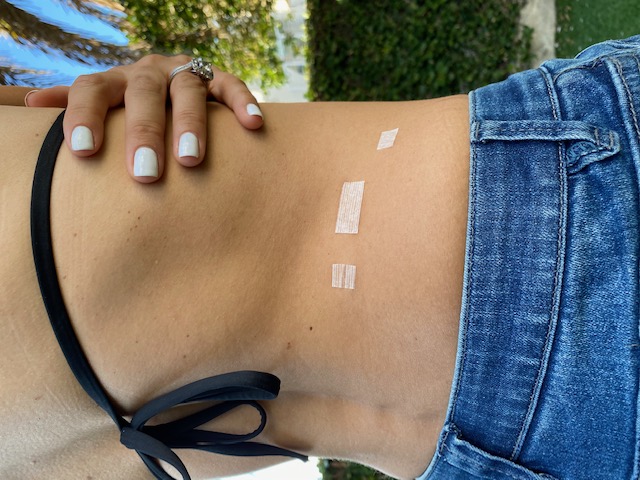 Typical small Band-Aids after a Mini Back Scope Adrenalectomy (MBSA) for an adrenal tumor causing primary aldosteronism (Conn's syndrome).
What are the Benefits of Adrenalectomy for Primary Aldosteronism, and What are the Cure Rates?
There are many benefits to having the source of the excess aldosterone removed. After adrenalectomy for one-sided (unilateral) PA, the aldosterone excess is cured in the large majority of patients (about 94% in the international PASO study). High blood pressure is completely cured (i.e. normal blood pressure without any medication) in roughly a third to a half of patients, and most of the rest have a significant improvement in their blood pressure and need fewer blood pressure drugs. Factors that predict complete cure of high blood pressure are younger age, female sex, a shorter duration of high blood pressure, use of fewer blood pressure medications before surgery, and no kidney damage. A family history of hypertension makes it more likely that some high blood pressure will remain. Furthermore, curative surgery for PA reduces the risk of target organ damage, that is, damage to the heart, blood vessels, kidneys and brain. The patient's quality of life is likely to improve, primarily through improvement in anxiety, depressive symptoms, psychological distress, fatigue, lack of energy, reduced activity level, various emotional problems, and body aches.
What to Expect After Adrenalectomy for Primary Aldosteronism
Potassium and aldosterone levels return to normal quickly after surgery, and potassium supplements and spironolactone can usually be stopped right away. Blood pressure improves more gradually, over weeks to months, and your medications are reduced step by step. Kidney function (eGFR) may appear to drop after PA is cured. This is not new damage: the excess aldosterone had been making the kidneys over-filter, which masked kidney damage that was already there.Cortisol matters too. Between 13% and 27% of patients with PA also make too much cortisol (PA+AHC), so every patient with PA should have a 1-mg dexamethasone suppression test before surgery. The morning after the operation we test how well the remaining adrenal tissue makes cortisol, and steroid replacement is given only to patients who need it.
What your pathology report means (HISTALDO). Every PA specimen should be stained for aldosterone synthase (CYP11B2), the enzyme that makes aldosterone. This staining shows exactly where the hormone came from and is classified by an international system called HISTALDO. Classic histology means a single aldosterone-producing adenoma (APA; 1 cm or larger) or aldosterone-producing nodule (APN; smaller than 1 cm), and it predicts cure. Non-classic histology means multiple aldosterone-producing nodules or micronodules (MAPN/M) or aldosterone-producing diffuse hyperplasia (APDH). It carries a higher risk that PA persists or returns, often because the other gland is also affected, so these patients need closer follow-up.
My Doctor Wants to Treat My Primary Aldosteronism with Medications. Is That as Good as Surgery?
It depends on the type of PA. For one-sided (unilateral) disease, we believe surgery is clearly better than lifelong medication, and that surgery is underused. Medications called mineralocorticoid receptor antagonists (spironolactone and eplerenone) block the effects of aldosterone, but they must be taken for life, side effects often limit the dose, and the tumor does not disappear with medications. Adrenalectomy removes the source, improves quality of life, and protects the heart, blood vessels, kidneys and brain more reliably. Medication is the appropriate treatment for mild PA, for most patients with disease in both adrenal glands (bilateral PA), and for patients who are not candidates for surgery; newer drugs (aldosterone synthase inhibitors) are emerging. We have two entire pages dedicated to the Mini Back Scope Adrenalectomy (MBSA), and its benefits.
Can Surgery Help When Both Adrenal Glands are Involved? Adrenal-Sparing Surgery
In selected patients with more severe bilateral PA, yes. An adrenal gland does not always have to be removed whole. With adrenal-sparing surgery (partial adrenalectomy), the aldosterone-producing tissue is removed and enough healthy adrenal tissue (at least about 30% of one gland) is left behind to avoid lifelong steroid dependence. When both glands need treatment, we operate in stages at least 6 weeks apart, because many patients respond so well to the first operation that the second is never needed. To be clear about the evidence: bilateral PA is often milder and responds well to medication, and trials comparing surgery with medication for bilateral PA are lacking, so this decision is made individually.A note on prevention: Preventive medicine is popular in our culture nowadays, for good reasons. Of course, the idea of preventing future disease is great, but sometimes it is easier said than done. There are some great examples: stopping smoking and losing weight if you are obese are likely to prevent future disease. Having an adrenalectomy for primary aldosteronism may be one of the most effective preventive medical interventions to avoid future devastating diseases.
Last updated October 2026.
What to read next
- Mini Back Scope Adrenalectomy (MBSA) - our preferred adrenal operation, used for more than 95% of our operations.
- More about our founder Dr. Tobias Carling - one of the world's most experienced adrenal surgeons.
- How to become our patient, and have Dr. Carling perform your adrenal surgery.
- The 8 ways adrenal surgery can be performed - learn about the different types of surgery and when they are appropriate.